Contact us for more details
Contact for more details.
Empowering Healthcare Professionals for a Better Tomorrow
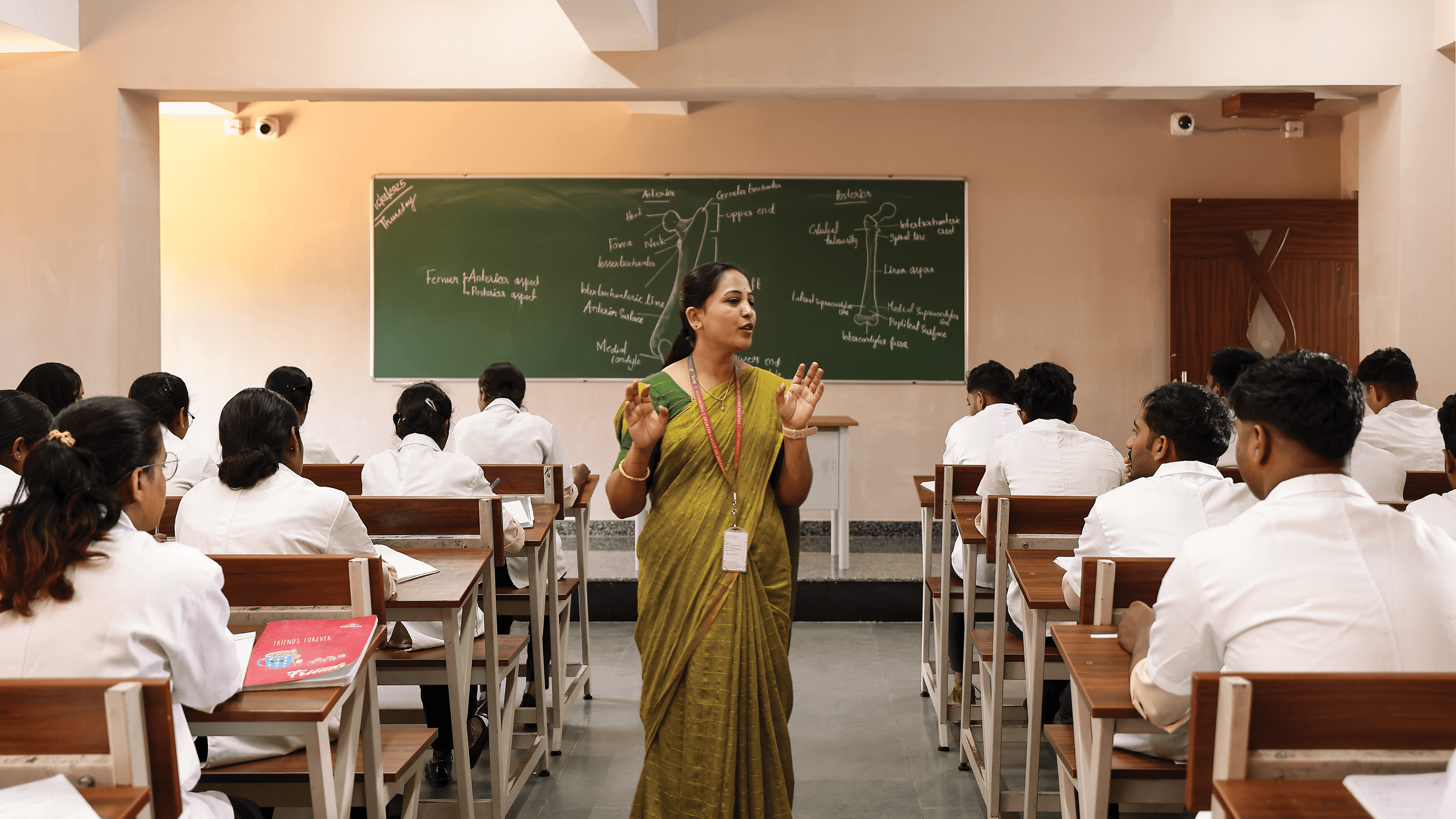
At Spurthy College of Allied Health Sciences, we prepare students for rewarding careers in the rapidly evolving healthcare industry through a balanced approach to academic excellence, clinical training, and professional development. Our undergraduate programmes combine classroom learning with hands-on clinical experience, enabling students to develop the knowledge, technical expertise, and compassion required to deliver quality patient care.
With experienced faculty, modern laboratories, hospital-based training, and industry-relevant education, we equip students to become competent healthcare professionals who can contribute confidently to hospitals, diagnostic centres, rehabilitation facilities, research organisations, and the broader healthcare ecosystem.
Programs Offered
B.Sc. Neuroscience
Build a Career in Brain Science, Clinical Research, and Healthcare
Welcome to Spurthy College, where innovation meets excellence in healthcare education. The Bachelor of Science (B.Sc.) in Neuroscience is an advanced undergraduate program that explores the structure, function, and disorders of the human brain and nervous system.
Designed for students passionate about neuroscience, psychology, medicine, and research, this program combines theoretical learning, laboratory training, and clinical exposure to prepare graduates for careers in healthcare, research, rehabilitation, and higher education.
Why Choose Spurthy College for B.Sc. Neuroscience?
Spurthy College provides a dynamic learning environment that helps students develop scientific knowledge, practical skills, and research capabilities.
Program Highlights
Industry-oriented curriculum
Experienced faculty and healthcare professionals
Modern neuroscience and life science laboratories
Clinical exposure in affiliated hospitals
Research-based learning
Smart classrooms and digital learning resources
Internship opportunities
Career guidance and placement support
Well-equipped library
Hostel and transportation facilities
Duration
4 Years (including 1 year internship)
Eligibility
Candidates who have completed 10+2 with Physics, Chemistry, and Biology (or equivalent) from a recognized board are eligible, subject to university admission regulations.
Curriculum Highlights
The curriculum is designed to provide a strong foundation in neuroscience and allied health sciences.
Core Subjects
Human Anatomy
Human Physiology
Neuroanatomy
Neurophysiology
Cell Biology
Biochemistry
Molecular Biology
Neuropharmacology
Clinical Neuroscience
Neurological Disorders
Cognitive Neuroscience
Neuropsychology
Research Methodology
Biostatistics
Clinical Training
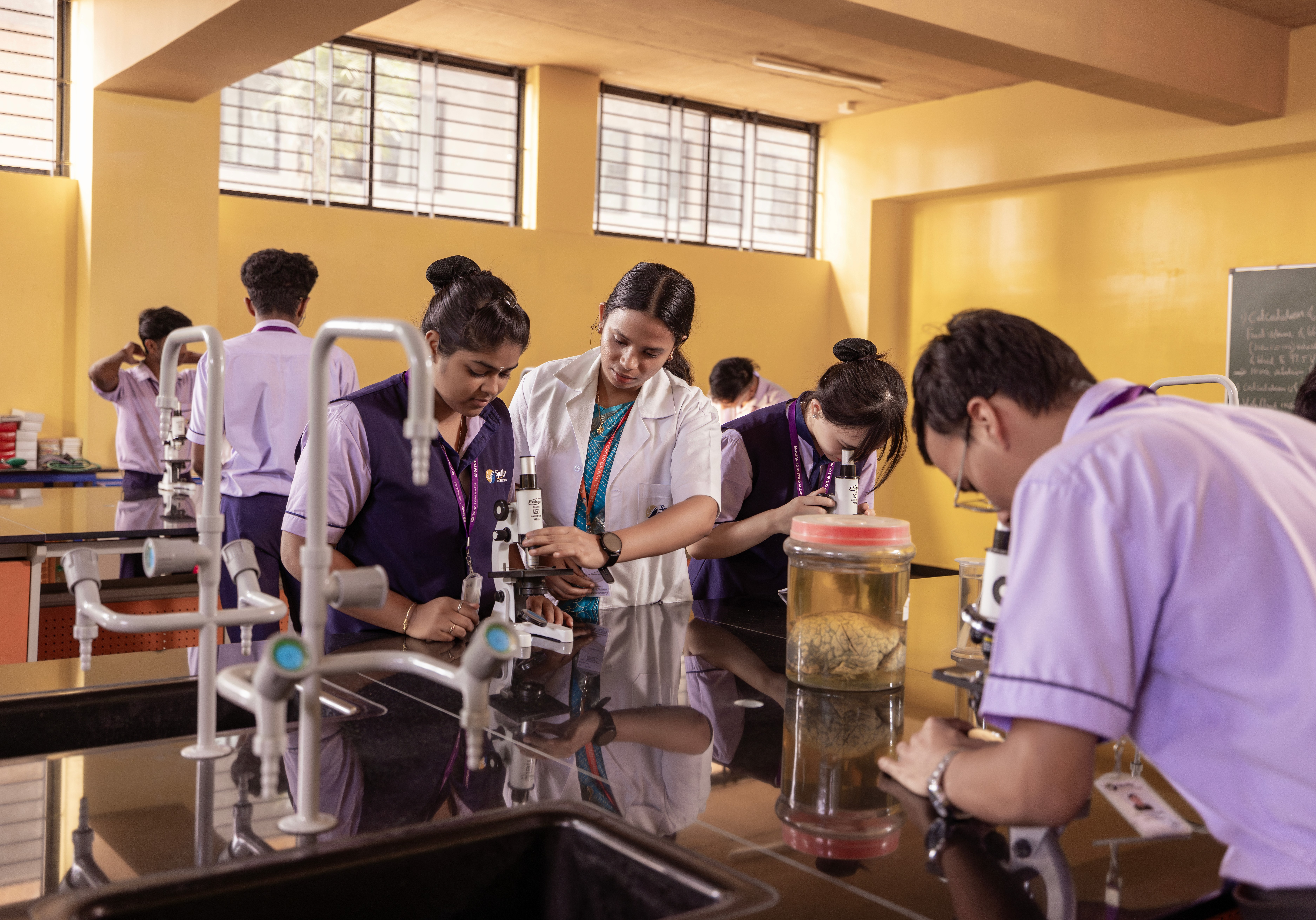
Practical Learning & Clinical Training
Students receive hands-on learning through:
Neuroscience Laboratories
Clinical Demonstrations
Hospital-Based Training
Neurology Departments
Rehabilitation Centres
Research Projects
Scientific Workshops
Case-Based Learning
Clinical exposure helps students understand neurological conditions and patient care in real-world healthcare settings.
Career Opportunities
Graduates of the B.Sc. Neuroscience program have diverse career opportunities in healthcare, research, and life sciences.
Career Options
Neuroscience Research Assistant
Clinical Research Coordinator
Neurodiagnostic Technologist
EEG Technician
Neurophysiology Technologist
Rehabilitation Specialist
Medical Laboratory Professional
Clinical Data Associate
Healthcare Consultant
Research Associate
Employment opportunities include:
Hospitals
Neuroscience Centres
Research Institutes
Medical Colleges
Pharmaceutical Companies
Clinical Research Organizations (CROs)
Rehabilitation Centres
Biotechnology Companies
Graduates may also pursue higher studies such as M.Sc. Neuroscience, Clinical Neuroscience, Neuropsychology, Public Health, or related life science programs.
Bachelor of Medical Imaging Technology (BMIT)
Advancing Healthcare Through Medical Imaging
The Bachelor of Medical Imaging Technology programme equips students with the knowledge and technical skills required to operate advanced diagnostic imaging equipment used in modern healthcare. Students receive practical training in radiographic procedures, patient positioning, radiation safety, and imaging technologies.
Programme Overview
Duration: 4 Years (Including Internship)
Eligibility: 10+2 with Physics, Chemistry and Biology.
Key Learning Areas
Radiographic Techniques | Diagnostic Imaging | CT & MRI Fundamentals | Radiation Physics | Imaging Equipment | Patient Care & Safety | Anatomy & Physiology
Career Opportunities
Radiology Technologist
MRI Technologist
CT Scan Technologist
Imaging Centre Executive
Hospital Radiographer
Diagnostic Imaging Specialist
Bachelor of Operation Theatre Technology (BOTT)
Supporting Excellence in Surgical Care
The Bachelor of Operation Theatre Technology programme prepares students to assist surgeons, anaesthetists, and healthcare teams during surgical procedures while ensuring safe and efficient operation theatre management.
Programme Overview
Duration: 4 Years (Including Internship)
Eligibility: 10+2 with Physics, Chemistry and Biology.
Key Learning Areas
Surgical Procedures | Operation Theatre Management | Anaesthesia Technology | Infection Control | Sterilisation Techniques | Patient Monitoring | Emergency Care
Career Opportunities
Operation Theatre Technologist
Surgical Assistant
Anaesthesia Technician
Hospital OT Coordinator
Trauma Care Assistant
Undergraduate Curriculum:
The curriculum focuses on hands-on training and hospital exposure, preparing students for roles in healthcare and diagnostics.
Admission Requirements:
Candidates must have completed PUC / Class 12 with Physics, Chemistry, and Biology as per RGUHS norms.
Career Support & Placement
Preparing Healthcare Professionals for Successful Careers
Our dedicated career development initiatives help students transition confidently from academics to professional practice.
Students benefit from:
Career Counselling
Resume & Interview Preparation
Placement Assistance
Hospital Recruitment Support
Professional Skill Development
Industry Interaction Programmes
Graduates are well-prepared for employment opportunities across hospitals, diagnostic laboratories, specialty clinics, rehabilitation centers, research organisations, public healthcare institutions, and the growing allied healthcare sector.
Why Allied Health Sciences?
Allied Health Sciences professionals play a vital role in modern healthcare by supporting diagnosis, treatment, rehabilitation, and patient care. As healthcare services continue to expand globally, the demand for skilled allied health professionals is increasing across hospitals, diagnostic centers, research institutions, and specialised healthcare facilities.
At Spurthy College of Allied Health Sciences, students gain the academic knowledge, clinical expertise, and professional confidence needed to become compassionate healthcare professionals who contribute meaningfully to improving lives and strengthening healthcare systems.
Learning Beyond the Classroom
Practical Learning That Builds Professional Confidence
Healthcare education requires more than theoretical knowledge. At Spurthy College, students participate in practical sessions, clinical postings, internships, laboratory training, workshops, and healthcare outreach initiatives that provide valuable real-world experience.
Learning opportunities include:
Clinical Internships
Hospital-Based Practical Training
Diagnostic Laboratory Exposure
Healthcare Workshops
Simulation-Based Learning
Guest Lectures by Medical Professionals
Community Health Programmes
Career Development Sessions
Clinical Training & Professional Exposure
Experience Healthcare in Real-World Settings
Students receive supervised clinical exposure through affiliated hospitals and healthcare institutions, enabling them to develop practical competencies, professional ethics, patient interaction skills, and confidence in delivering quality healthcare services.
Clinical learning focuses on integrating classroom knowledge with evidence-based healthcare practices, preparing graduates to transition seamlessly into professional environments.
Contact us for more details
Contact for more details.
Empowering Healthcare Professionals for a Better Tomorrow
At Spurthy College of Allied Health Sciences, we prepare students for rewarding careers in the rapidly evolving healthcare industry through a balanced approach to academic excellence, clinical training, and professional development. Our undergraduate programmes combine classroom learning with hands-on clinical experience, enabling students to develop the knowledge, technical expertise, and compassion required to deliver quality patient care.
With experienced faculty, modern laboratories, hospital-based training, and industry-relevant education, we equip students to become competent healthcare professionals who can contribute confidently to hospitals, diagnostic centres, rehabilitation facilities, research organisations, and the broader healthcare ecosystem.
Programs Offered
B.Sc. Neuroscience
Build a Career in Brain Science, Clinical Research, and Healthcare
Welcome to Spurthy College, where innovation meets excellence in healthcare education. The Bachelor of Science (B.Sc.) in Neuroscience is an advanced undergraduate program that explores the structure, function, and disorders of the human brain and nervous system.
Designed for students passionate about neuroscience, psychology, medicine, and research, this program combines theoretical learning, laboratory training, and clinical exposure to prepare graduates for careers in healthcare, research, rehabilitation, and higher education.
Why Choose Spurthy College for B.Sc. Neuroscience?
Spurthy College provides a dynamic learning environment that helps students develop scientific knowledge, practical skills, and research capabilities.
Program Highlights
Industry-oriented curriculum
Experienced faculty and healthcare professionals
Modern neuroscience and life science laboratories
Clinical exposure in affiliated hospitals
Research-based learning
Smart classrooms and digital learning resources
Internship opportunities
Career guidance and placement support
Well-equipped library
Hostel and transportation facilities
Duration
4 Years (including 1 year internship)
Eligibility
Candidates who have completed 10+2 with Physics, Chemistry, and Biology (or equivalent) from a recognized board are eligible, subject to university admission regulations.
Curriculum Highlights
The curriculum is designed to provide a strong foundation in neuroscience and allied health sciences.
Core Subjects
Human Anatomy
Human Physiology
Neuroanatomy
Neurophysiology
Cell Biology
Biochemistry
Molecular Biology
Neuropharmacology
Clinical Neuroscience
Neurological Disorders
Cognitive Neuroscience
Neuropsychology
Research Methodology
Biostatistics
Clinical Training
Practical Learning & Clinical Training
Students receive hands-on learning through:
Neuroscience Laboratories
Clinical Demonstrations
Hospital-Based Training
Neurology Departments
Rehabilitation Centres
Research Projects
Scientific Workshops
Case-Based Learning
Clinical exposure helps students understand neurological conditions and patient care in real-world healthcare settings.
Career Opportunities
Graduates of the B.Sc. Neuroscience program have diverse career opportunities in healthcare, research, and life sciences.
Career Options
Neuroscience Research Assistant
Clinical Research Coordinator
Neurodiagnostic Technologist
EEG Technician
Neurophysiology Technologist
Rehabilitation Specialist
Medical Laboratory Professional
Clinical Data Associate
Healthcare Consultant
Research Associate
Employment opportunities include:
Hospitals
Neuroscience Centres
Research Institutes
Medical Colleges
Pharmaceutical Companies
Clinical Research Organizations (CROs)
Rehabilitation Centres
Biotechnology Companies
Graduates may also pursue higher studies such as M.Sc. Neuroscience, Clinical Neuroscience, Neuropsychology, Public Health, or related life science programs.
Bachelor of Medical Imaging Technology (BMIT)
Advancing Healthcare Through Medical Imaging
The Bachelor of Medical Imaging Technology programme equips students with the knowledge and technical skills required to operate advanced diagnostic imaging equipment used in modern healthcare. Students receive practical training in radiographic procedures, patient positioning, radiation safety, and imaging technologies.
Programme Overview
Duration: 4 Years (Including Internship)
Eligibility: 10+2 with Physics, Chemistry and Biology.
Key Learning Areas
Radiographic Techniques | Diagnostic Imaging | CT & MRI Fundamentals | Radiation Physics | Imaging Equipment | Patient Care & Safety | Anatomy & Physiology
Career Opportunities
Radiology Technologist
MRI Technologist
CT Scan Technologist
Imaging Centre Executive
Hospital Radiographer
Diagnostic Imaging Specialist
Bachelor of Operation Theatre Technology (BOTT)
Supporting Excellence in Surgical Care
The Bachelor of Operation Theatre Technology programme prepares students to assist surgeons, anaesthetists, and healthcare teams during surgical procedures while ensuring safe and efficient operation theatre management.
Programme Overview
Duration: 4 Years (Including Internship)
Eligibility: 10+2 with Physics, Chemistry and Biology.
Key Learning Areas
Surgical Procedures | Operation Theatre Management | Anaesthesia Technology | Infection Control | Sterilisation Techniques | Patient Monitoring | Emergency Care
Career Opportunities
Operation Theatre Technologist
Surgical Assistant
Anaesthesia Technician
Hospital OT Coordinator
Trauma Care Assistant
Undergraduate Curriculum:
The curriculum focuses on hands-on training and hospital exposure, preparing students for roles in healthcare and diagnostics.
Admission Requirements:
Candidates must have completed PUC / Class 12 with Physics, Chemistry, and Biology as per RGUHS norms.
Career Support & Placement
Preparing Healthcare Professionals for Successful Careers
Our dedicated career development initiatives help students transition confidently from academics to professional practice.
Students benefit from:
Career Counselling
Resume & Interview Preparation
Placement Assistance
Hospital Recruitment Support
Professional Skill Development
Industry Interaction Programmes
Graduates are well-prepared for employment opportunities across hospitals, diagnostic laboratories, specialty clinics, rehabilitation centers, research organisations, public healthcare institutions, and the growing allied healthcare sector.
Why Allied Health Sciences?
Allied Health Sciences professionals play a vital role in modern healthcare by supporting diagnosis, treatment, rehabilitation, and patient care. As healthcare services continue to expand globally, the demand for skilled allied health professionals is increasing across hospitals, diagnostic centers, research institutions, and specialised healthcare facilities.
At Spurthy College of Allied Health Sciences, students gain the academic knowledge, clinical expertise, and professional confidence needed to become compassionate healthcare professionals who contribute meaningfully to improving lives and strengthening healthcare systems.
Learning Beyond the Classroom
Practical Learning That Builds Professional Confidence
Healthcare education requires more than theoretical knowledge. At Spurthy College, students participate in practical sessions, clinical postings, internships, laboratory training, workshops, and healthcare outreach initiatives that provide valuable real-world experience.
Learning opportunities include:
Clinical Internships
Hospital-Based Practical Training
Diagnostic Laboratory Exposure
Healthcare Workshops
Simulation-Based Learning
Guest Lectures by Medical Professionals
Community Health Programmes
Career Development Sessions
Clinical Training & Professional Exposure
Experience Healthcare in Real-World Settings
Students receive supervised clinical exposure through affiliated hospitals and healthcare institutions, enabling them to develop practical competencies, professional ethics, patient interaction skills, and confidence in delivering quality healthcare services.
Clinical learning focuses on integrating classroom knowledge with evidence-based healthcare practices, preparing graduates to transition seamlessly into professional environments.

Aspire
Discover
Achieve
Aspire
Discover
Achieve
Begin Your Journey Toward Academic Distinction
A place to provide students with enough knowledge and skills in a complex world. Are you looking for exceptional education experience?
Spurthy Institutions might be the place for you.
Begin Your Journey Toward Academic Distinction
A place to provide students with enough knowledge and skills in a complex world. Are you looking for exceptional education experience?
Spurthy Institutions might be the place for you.
Begin Your Journey Toward Academic Distinction
A place to provide students with enough knowledge and skills in a complex world. Are you looking for exceptional education experience?
Spurthy Institutions might be the place for you.
